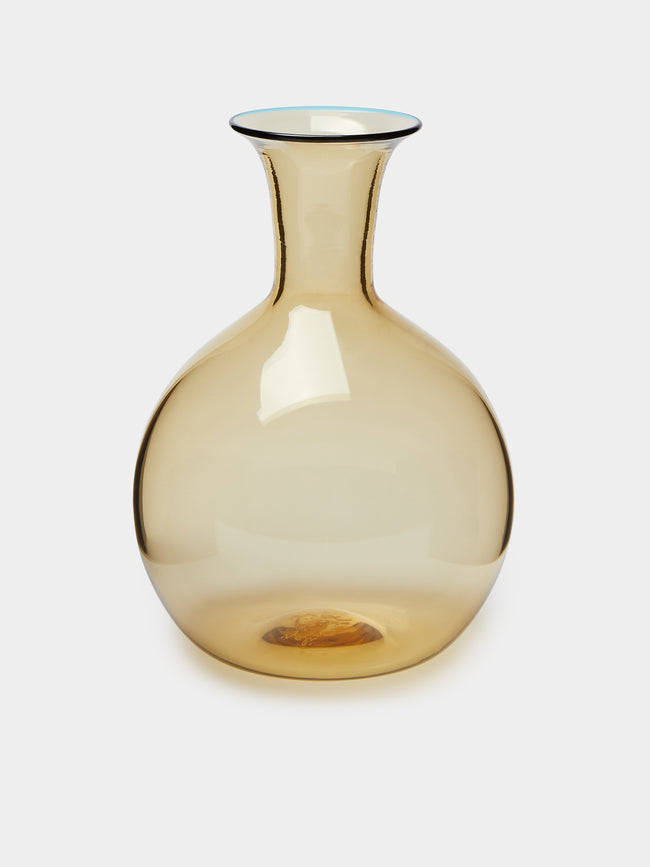
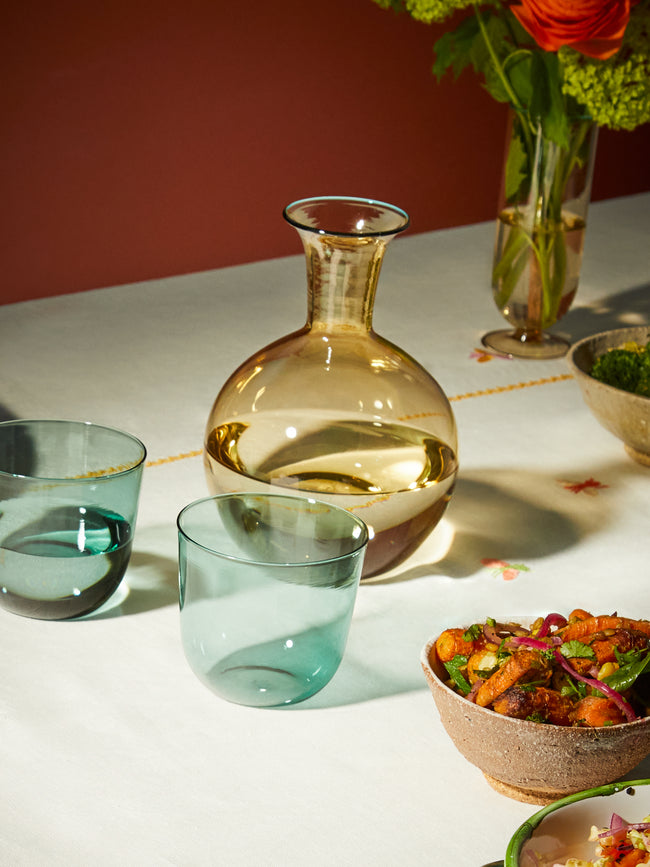
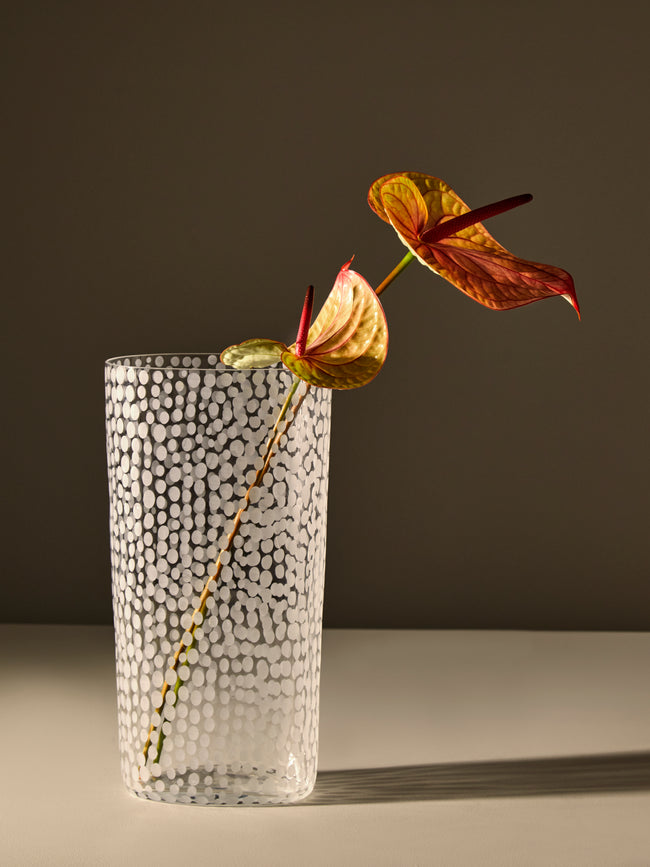
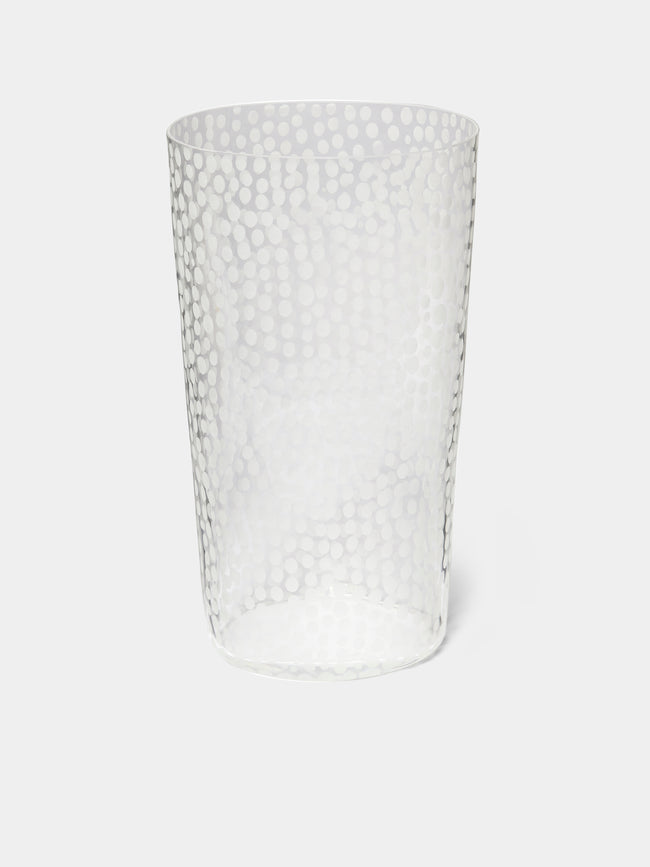
Yali Glass Fiori Hand-Blown Murano Glass Vase (15in/38cm)
€4,800
2 Colors


Yali Glass Fiori Hand-Blown Murano Glass Vase (15in/38cm)
€4,800
7,000+ products IN STOCK and READY TO SHIP
7,000+ products IN STOCK and READY TO SHIP
Sommerso, millefiori, incalmo, battuti: if the time-honored techniques of Murano glassmaking sound like a list of Renaissance poets, it’s because this is an art form versed in centuries of craftsmanship. And these are just a few of the fascinating methods and details that make Murano glass determinedly unique. Dating back to the Roman era in Venice, glassmaking is its most celebrated and valued of traditions and one whose legacy continues to be written.


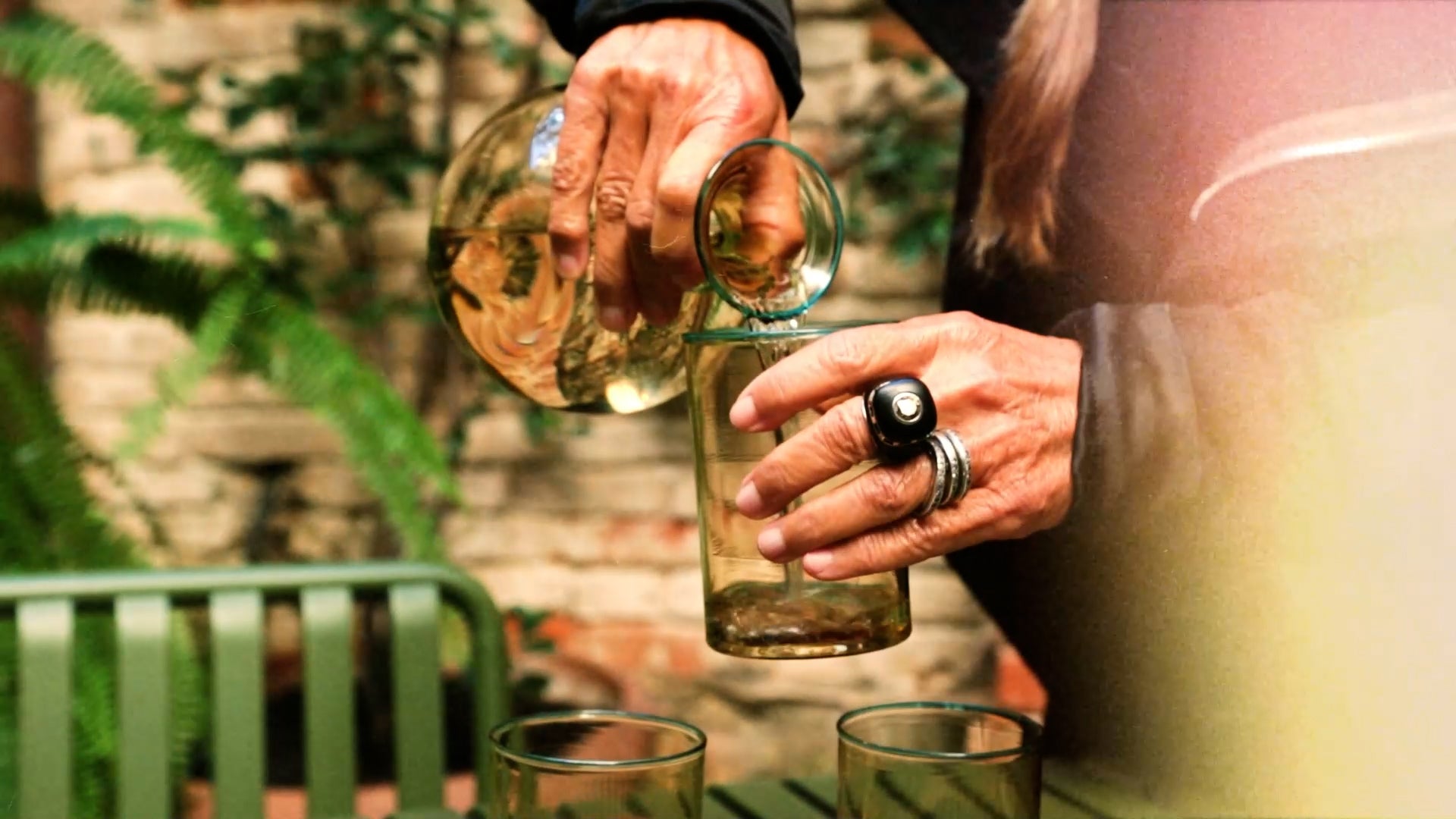
“The techniques the maestros in the furnace developed and still use are just amazing,” says Marie-Rose Kahane, who launched Yali Glass in 2008.
Among other methods, Kahane has adapted the traditionally ornate filigrana technique, which has a fine white line running through it almost like a textile, to make a simple cylinder. “Transforming something is what we do all the time; there’s a bridge building between the past and the future.”

Yali Glass Fiori Hand-Blown Murano Glass Vase (15in/38cm)
€4,800
Yali Glass Boboli Hand-Blown Murano Glass Vase (8.5in/22cm)
€2,700


Yali Glass Twist Bar Hand-Blown Murano Glass Portable Lamp
€1,345

Yali Glass Kasa Hand-Blown Murano Glass Vide Poche
€900


Yali Glass | Set of 6 | Classic Hand-Blown Murano Glass Cocktail Stirrers
€215

Yali Glass Fiori Bolla Hand-Blown Murano Glass Vase (9.5in/24cm)
€2,075

Yali Glass Hand-Blown Murano Glass Ice Cream Sundae Serving Bowl
€330


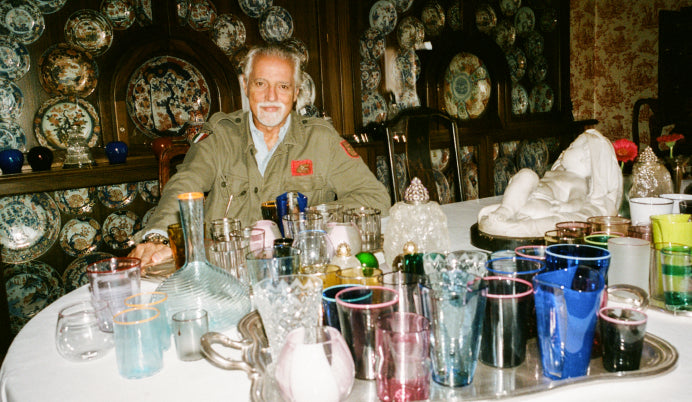
”Keeping the legacy of Murano glassmaking alive demands an embrace of experimentation rather than attempting to reinvent the wheel,” says Giberto Arrivabene Valenti Gonzaga. He started his eponymous brand, Giberto, 18 years ago as “a hobby” to complement his main job as an insurance broker and has since revolutionized the rigàmenà technique to create a teardrop on the rim of his signature Julia glass.
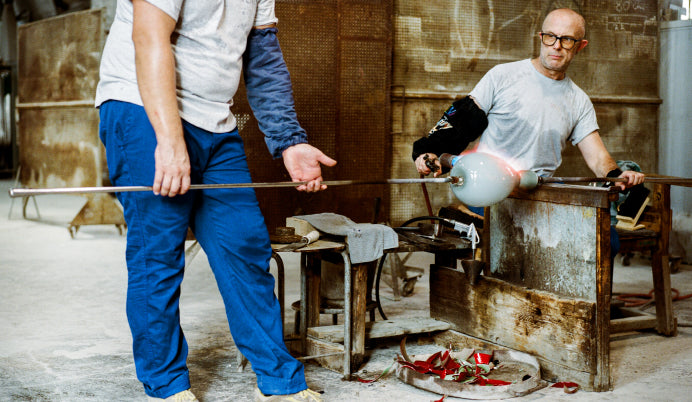
That Kahane and Gonzaga were able to indulge their passions at all is testament to how far the art of Murano glassmaking has come. After the government moved production to Murano from central Venice in the 13th century for fear of the scorchingly hot furnaces (which can reach over 2,000 degrees Celsius) setting the stilted city alight, it became a highly secretive affair.


Giberto Heart Hand-Blown Murano Glass Paperweight
€690


Giberto Peonia Hand-Blown Murano Glass Photo Frame (9x12")
€1,800


Giberto Julia Teardrop Hand-Blown Murano Glass Tumbler
€235


Giberto Alessandrite Spring Hand-Blown Murano Glass Tumbler
€180


“Murano glassmaking is not just an art—it’s a feat of endurance,” says UK-based Rebecca Marks whose brand, Green Wolf Lighting, works closely with the Murano community to create its multicolored Murano glass table lamps. “The craft is built on centuries-old, closely guarded techniques passed down through families, but it’s also physically grueling. Something I learnt when visiting the factories is that they work under incredibly difficult and extreme conditions, in close proximity to ovens even in the summer months! As a visitor walking even a meter away from these furnaces feels impossible, so you appreciate not only the skill but the resilience of the artisans who keep this ancient tradition alive.”
Originally, glassmakers were prohibited from working outside Murano and threatened with a death sentence for disclosing the special recipe of silica, lime, soda, and potassium or the minerals mixed to make different colors. Their blowing, twisting, turning and dipping methods also remained firmly under wraps, while intermarriage between Murano residents and those on the mainland Italy was also firmly off limits. Such restrictions—and suspicions—have since eased off, although the prestige in the profession remains strong.


Green Wolf Lighting Ametista I Hand-Blown Murano Glass Portable Table Light
€450


Green Wolf Lighting Curve Hand-Blown Murano Glass Portable Table Light
€455


Green Wolf Lighting Titanio II Hand-Blown Murano Glass Portable Table Light
€475


Green Wolf Lighting by Solange Azagury-Partridge Cloud Hand-Blown Murano Glass Portable Table Light
€665

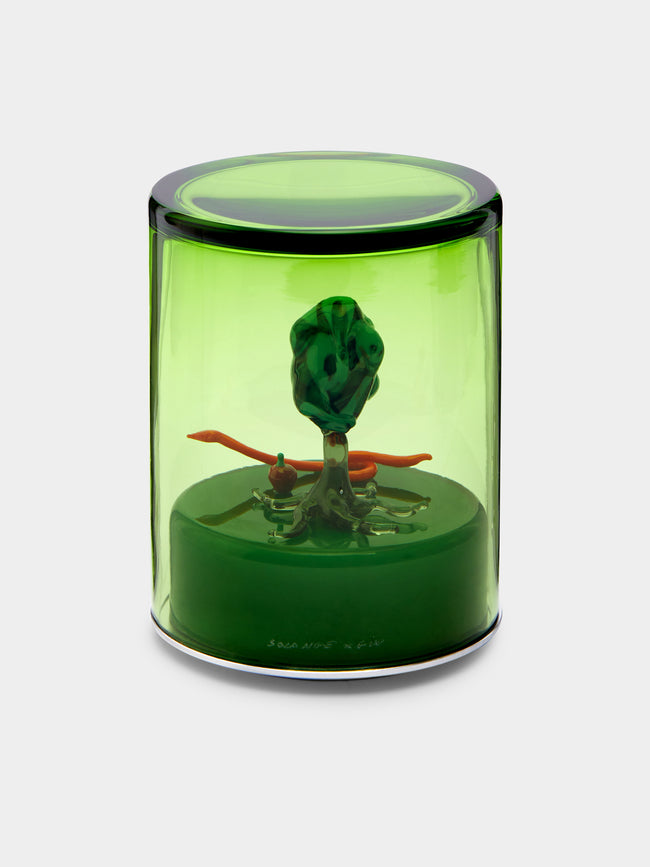
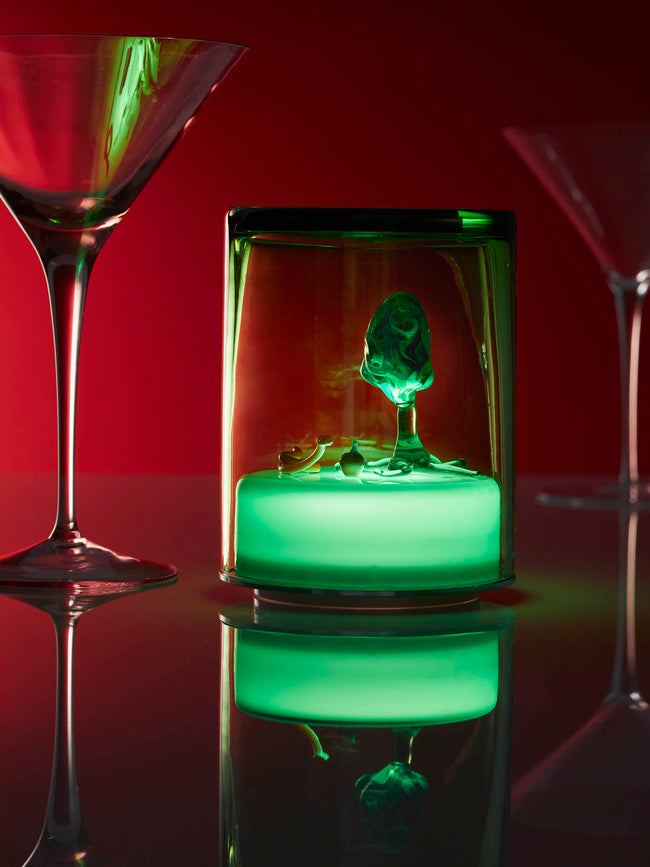
Green Wolf Lighting by Solange Azagury-Partridge Eden Hand-Blown Murano Glass Portable Table Light
€665

Green Wolf Lighting Curve Hand-Blown Murano Glass Portable Table Light
€455

Green Wolf Lighting Ambra II Hand-Blown Murano Glass Portable Table Light
€475

Green Wolf Lighting Inciso Hand-Blown Murano Glass Portable Table Light
€495

Green Wolf Lighting by Solange Azagury-Partridge Sun Hand-Blown Murano Glass Portable Table Light
€665

Green Wolf Lighting Curve Hand-Blown Murano Glass Portable Table Light
€455

Green Wolf Lighting by Solange Azagury-Partridge Rainbow Hand-Blown Murano Glass Portable Table Light
€665

Green Wolf Lighting Curve Hand-Blown Murano Glass Portable Table Light
€455


“Murano glass is alive,” says Brooklyn-based maker Kickie Chudikova, whose Murano glass vases and lights are famed for their quirky shapes. “The magic lies not only in the centuries-old tradition but also in the collaboration between designer and master glassblower. It’s not about achieving absolute perfection—it’s about embracing fluidity, unpredictability, and the human hand in every step. Unlike the Czech approach, where glass is often blown into precise wooden molds, Murano is freer, more intuitive. Each piece carries small imperfections that make it truly unique—that’s where its beauty lies.”


Kickie Chudikova Pulpopolis Cyanea Hand-Blown Murano Glass Portable Table Lamp
€7,795

Kickie Chudikova Pulpopolis Physalea Hand-Blown Murano Glass Portable Table Lamp
€8,705

Kickie Chudikova Pulpopolis Tamoya Hand-Blown Murano Glass Portable Table Lamp
€9,510


The most compelling USP of Murano glass remains the mesmerizing colors that the furnaces are able to achieve.
“One of Murano’s most fascinating secrets lies in its colors. Each furnace has its own “recipe book”, formulas of powders: oxides, and minerals mixed in precise proportions, guarded and refined over generations,” say makers Elena and Margherita Micheluzzi, who are second-generation custodians of the family business, Micheluzzi Glass, that their father, Massimo, founded in the 1970s. “What few people realize is that no two furnaces ever produce the same hue. Each palette is as unique as a fingerprint, giving every furnace its own identity. In Murano, color is not simply chosen, it is crafted. The raw mixture is melted at high temperatures and worked while still incandescent, allowing the colors to reveal their depth and brilliance.”


Over the years, Murano has become synonymous with many designers and masters, with the 20th century proving to be something of a heyday for Murano glass brands, among them Giacomo Cappellini and Paolo Venini. They established Venini in 1921, creating a Murano vase icon in the Veronese vase and making the “mano volante” (flying hand) technique world-famous with the Fazzoletto vase, a collaboration with Fulvio Bianconi that took its name from the handkerchief shape it depicts.

Venini Fazzoletto Hand-Blown Murano Glass Vase (9.5in/24cm)
€860


Venini Fazzoletto a Canne Hand-Blown Murano Glass Vase (11in/28.5cm)
€2,220

Venini Gio Ponti Pezzente Hand-Blown Murano Glass Tumblers (Set of 6)
€1,215

Venini Fantasmino Hand-Blown Murano Glass Portable Lamp
€655


Venini Deco Luce Hand-Blown Murano Glass Portable Lamp
€730


Venini Monofiore Balloton Hand-Blown Murano Glass Bud Vase (4.5in/11cm)
€380


Venini Gio Ponti Pezzente Hand-Blown Murano Glass Decanter
€2,275

Venini 1985 Laura de Santillana Monofiore Hand-Blown Murano Glass Perfume Bottle
€345


Venini Fantasmino XL Hand-Blown Murano Glass Portable Lamp
€2,050


Venini Balloton Luce Hand-Blown Murano Glass Portable Lamp
€645


Venini Gio Ponti Canne Hand-Blown Murano Glass Pitcher
€2,330

Venini Fazzoletto Hand-Blown Murano Glass Vase (9.5in/24cm)
€1,850


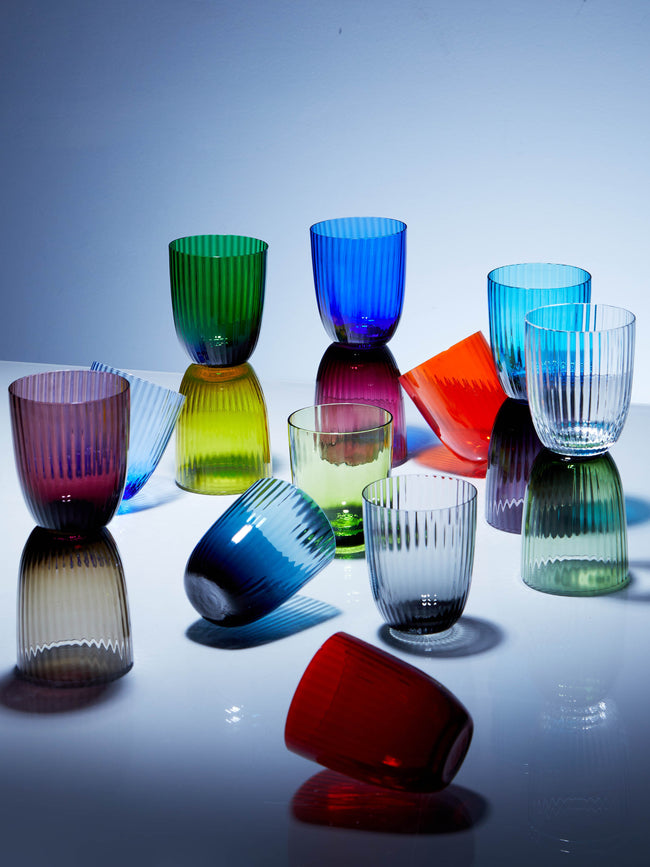
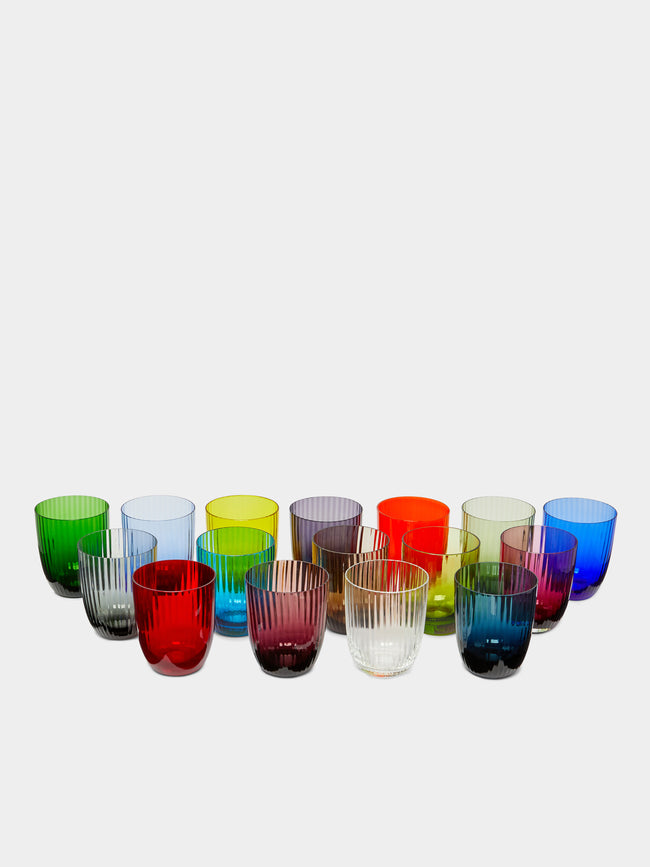
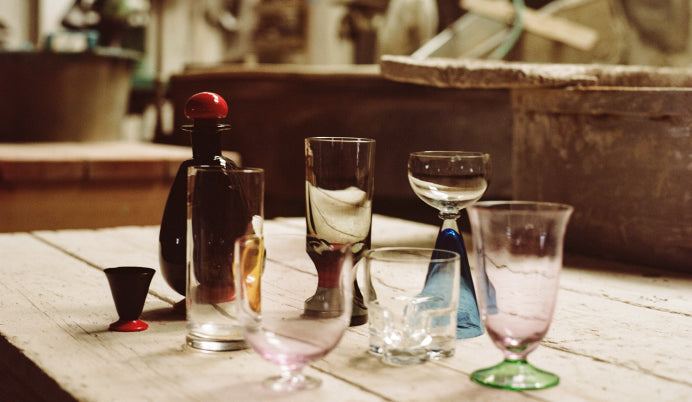
In 1923, Venini was joined by NasonMoretti, a brand founded by brothers Ugo, Antonio, Giuseppe, Vincenzo and Umberto Nason. Making its name for achieving an intensity of color, as it approaches its centenary year, it is still the only Murano glass brand that can produce 22 kinds of green and nine kinds of blue. “Every new collection we launch has almost six different colors—sometimes 12,” says Piero Nason, one of the third-generation members of the family business.
“This is the power of Murano glass. We look at our tradition to make invocation for the future, all the products we make for the future start from what we have done in the past.”

NasonMoretti Tolomeo Hand-Blown Murano Glass Tumblers (Set of 6)
€280

NasonMoretti Twisted Soraya Hand-Blown Murano White Wine Glass
€140

NasonMoretti Archive Revival 1941 Hand-Blown Murano Wine Glasses (Set of 2)
€295

NasonMoretti Idra Hand-Blown Murano Glass Striped Tumblers (Set of 16)
€800


NasonMoretti Tolomeo Hand-Blown Murano Red Wine Glasses (Set of 6)
€570

NasonMoretti Idra Hand-Blown Murano Glass Tumblers (Set of 6)
€370


Meanwhile, Carlo Moretti, founded by Murano-born brothers Carlo and Giovanni Moretti in 1958 and famed for its colorful abstract designs, compares the collaborative work of its glass masters to that of “a great orchestra [that] interprets each project and transforms it into the shapes of Murano crystal, blown by mouth, hand-finished, signed and dated.” That such beauty comes from this beguiling corner of the Venetian Lagoon is no surprise, as the surrounding waters and constant state of fluidity find a synergy with the vessels created there and their global makers.
“I’m drawn to Murano for the energy of the material and the artisans,” says Chudikova. “Working with Murano glass is a dialogue between my ideas and the craftsmen’s intuition. I bring the vision, but the final piece is shaped through trust, and communication between the glassblower and me.”


Carlo Moretti Sturm Hand-Blown Murano Glass Vase (9.5in/24cm)
€445

Carlo Moretti Bora Hand-Blown Murano Glass Tumblers – 15oz/440ml (Set of 6)
€875


Micheluzzi Glass Rullo Bamboo Hand-Blown Murano Glass Vase (4.5in/11cm)
€555

Venini Fantasmino Hand-Blown Murano Glass Portable Lamp
€655

Aina Kari Venetian Knot Hand-Blown Murano Glass Candlestick Holder
€1,000


NasonMoretti Twisted Soraya Hand-Blown Murano Water Glass
€62

F&M Ballarin Acquamarina Hand-Blown Murano Glass Vase (10in/25cm)
€295


Casarialto Cactus Hand-Blown Murano Glass Margarita Glasses (Set of 4)
€415

Venini Gio Ponti Canne Hand-Blown Murano Glass Tumblers (Set of 6)
€2,445

Giberto Fizzy Hand-Blown Murano Glass Water Tumbler
€180


Green Wolf Lighting Verde II Hand-Blown Murano Glass Portable Table Light
€475


Casarialto Fishtail Hand-Blown Murano Glass Water Jug
€270

Yali Glass Fiori Hand-Blown Murano Glass Vase (18.5in/47cm)
€4,405

Green Wolf Lighting Curve Hand-Blown Murano Glass Portable Table Light
€455

F&M Ballarin Filigrana Hand-Blown Murano Glass Tumblers (Set of 6)
€465

Aina Kari Venetian Knot Hand-Blown Murano Glass Candlestick Holder
€1,000

Antique and Vintage 1967 Fulvio Bianconi Murano Glass Double Bud Vase (8in/20cm)
€2,820

Carlo Moretti Millebolle Hand-Blown Murano Glass Vase (15in/38cm)
€1,518

Antique and Vintage 1960s Murano Glass Photo Frame (7x9")
€2,235

Yali Glass | Set of 6 | Manhattan Hand-Blown Murano Glass Cocktail Stirrers
€260

Venini Monofiore Balloton Hand-Blown Murano Glass Bud Vase (4.5in/11cm)
€380

Your Shopping Bag is currently empty