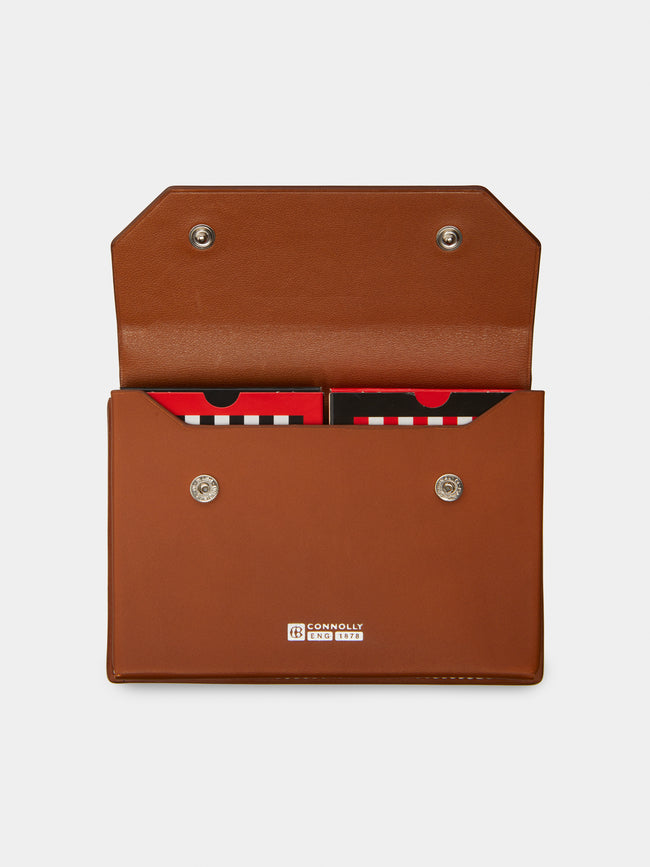
Giobagnara Leather Rummikub Set
£2,805
7,000+ products IN STOCK and READY TO SHIP
7,000+ products IN STOCK and READY TO SHIP


Embassy of Italy residence by Beppe Brancato
Embassy of Italy residence by Beppe Brancato
As a renowned arbiter of exquisite design details, the London-based design critic, curator and editor Nick Vinson’s adopted moniker ‘Picky Nicky’ is such for good reason.
Having been Wallpaper*’s trusted expert-at-large for over two decades, his interior design projects have seen his design bureau, Vinson&Co, collaborate with Armani/Casa, Berluti, Birkenstock 1774, and most recently, the Italian Embassy in London, where he oversaw the first remodeling of the ambassador’s residence in over nine decades in collaboration with Avanti Architects. Late last year, he even became conduit to ABASK securing its precious archival collection of San Lorenzo silver.
Here, he shares the role that design plays in his life, his tips for furnishing your home, and where his famous “quality mania” comes from.

“It plays a big role—it's everywhere and everything. I want to control everything through design, so I don’t think there's anything that can't be improved by having some kind of design process behind it."
“It’s different every time. It's usually a bit overwhelming at the beginning because there’s so much to fit in and you have to start somewhere. I do a lot of research and keep folders upon folders of images that I have collected. In the good-old days of Instagram, when it was very different, I found a lot of good material there. I also have many fabulous books, so will sometimes sit down with them, rediscover certain references, and look them up again.”
“Plane trips are great—I can sit for two hours and review photos that become starting points for mood, colors and materials. Once I’ve started a project, I regularly walk through a space to ensure everything flows properly; I’ll even close my eyes to sense what might be missing. That was especially useful with the Italian Embassy project, because it included 35 rooms and eight bathrooms across two floors, and they couldn’t all feel the same.”
Nick Vinson


San Lorenzo 1993 Afra and Tobia Scarpa Cartoccio Pure Silver Bowl (6in/15cm)
£825

Giobagnara x Poltrona Frau Walnut and Leather Round Tray (16.5in/42cm)
£690


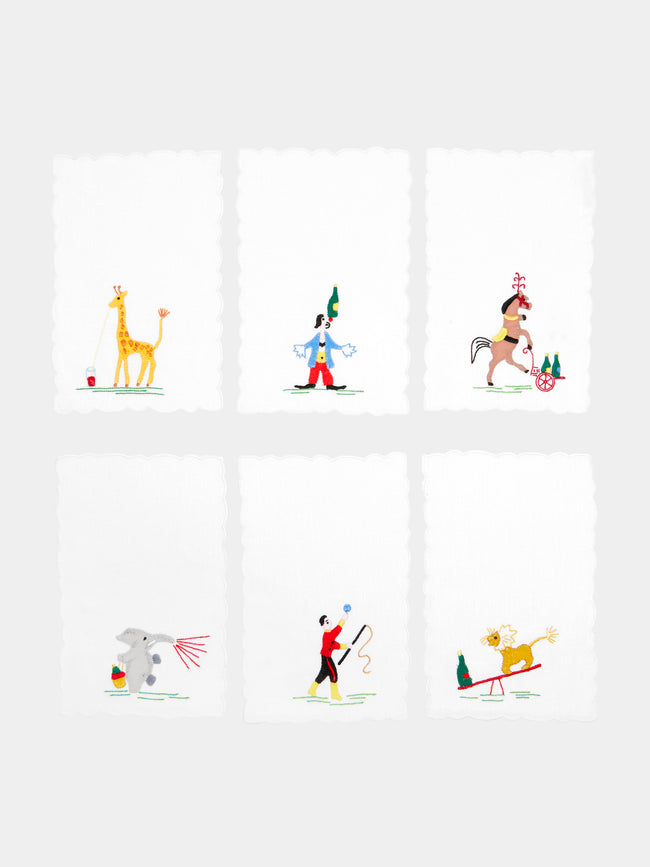
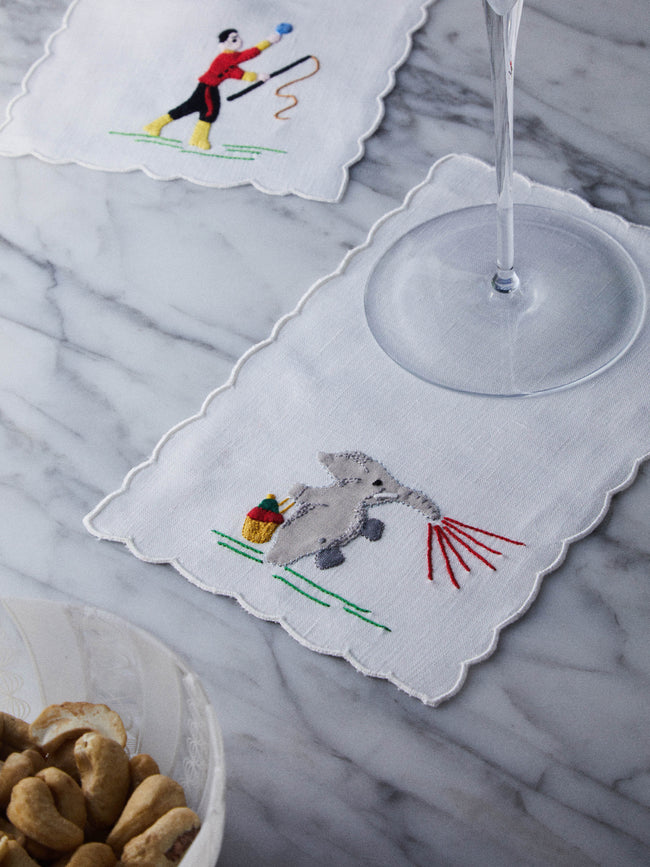
Taf Firenze | Set of 6 | Circo Hand-Embroidered Linen Cocktail Napkins
£350


Fornasetti Bordi Antichi Hand-Painted Metal Ice Bucket
£1,260


Venini Fazzoletto Hand-Blown Murano Glass Vase (9.5in/24cm)
£695


Venini Gio Ponti Apem Hand-Blown Murano Glass Decanter
£1,805


Carlo Moretti Fili Molati Hand-Blown Murano Water Glasses (Set of 2)
£370


“Absolutely. I have no comprehension of how to compose music, but I imagine it’s similar, adding layer by layer, or like creating a scent. My friend Lyn Harris, the perfumer, can compose notes in her head, understand what’s missing, and make everything work. I’ve taught myself to do that—perhaps because I’m often overwhelmed by what exists and what still needs finishing. It’s similar to how I cook: I taste as I go.”
“No, not really. That said, I've worked for Wallpaper* for 23 years, and in the early days there was a big mid-century focus, then suddenly Arne Jacobsen chairs were popping up in McDonald's. It made me realize that you have to be careful with things that may get overexposed, as people will eventually tire of them.”

“I’m conscious of pulling great pieces from different periods and mixing them together. In 2024, I visited the Florence Art Biennale with our neighbor Sandra, an Old Masters expert at Christie’s. I assumed I wouldn’t like anything because it would all be old, but I was completely surprised by what I fell in love with, and from which periods.
As a result, I later created a story for Armani/Casa—whom I’ve worked with for about 10 years—mixing Armani/Casa pieces with art and artifacts spanning the 1700s through the post-war period. And later another story ended up on the cover of Wallpaper* with two 18th-century urns on top of a contemporary console from Minotti from 2023 which was the first time the magazine probably ever had something from the 1700s on the cover. And, of course, it looked fabulous. It was my favorite ever cover."
“It started out very clean and minimal, but now I’d say it's eclectic because there are two of us. For example, we may have a Minotti sofa, but it’s surrounded by unusual and interesting objects. I give a lot of credit to my husband, Alvaro, because he's a big vintage snuffler and loves to find things that no one knows about.
It's nice to mix things up because everything is so labeled now; people either want branded Chanel or Vuitton, or a name like Jean Prouvé or Charlotte Perriand. That's fine if it makes them feel good, but I find it much more interesting to mix things of big and small value.”


Does the distinction lie between following the crowd and following your own instinct?
“I think our job is to find what isn’t so well known, perhaps someone waiting to be discovered, something to be rediscovered, or something unusual yet fabulous. Not the super well-known, super famous thing that everyone else is already onto. You've just got to keep going and discovering things.”
What do you enjoy about connecting people with makers and objects in this way?
“When you see someone doing something amazing, but no one really knows about it, then it's your role as an editor to inform someone who's going to want to know about it. Tom (ABASK co-founder) and I had talked about San Lorenzo before, but there hadn’t been the right opportunity. But I knew it had to happen, and that he was the only person who would truly understand it and do something great with it at ABASK.”
Nick Vinson


Wiener Silber Manufactur Otto Prutscher Sterling Silver Bonbonniere
£3,950


Lobmeyr | Set of 4 | Alpha Crystal Shot Glasses
£200


Puiforcat Etchéa Silver-Plated Round Tray (15.5in/40cm)
£2,010


“Before presenting to the ambassador and his team for the residence in particular, I explained why I was proposing certain pieces, as the residence needs to work for multiple ambassadors over many years without requiring constant updates. That’s why we chose pieces designed by what we call the maestri—respected architects from the late 20th century who form the foundation of Made in Italy. These works are held in institutions like MoMA, the Triennale, and The Design Museum, and have received honors such as the Compasso d’Oro and Wallpaper* Design Awards. After 40, 50, or 60 years, they still look good—no one’s bored of them.”
“Things that can no longer be made because the creator is no longer around. When someone with a great career moves on or passes away, their body of work—and often the ability to create it—becomes finite, and that adds great value for me.
I'm going through a moment with Véronique Nichanian at Hermès who stepped down as menswear director after 38 years. As I got dressed for her final show in Paris in January, I realized that, as there were only two more collections to come, her work was doubly precious.
It’s the same with San Lorenzo. These pieces may eventually pop up at auction, but they can’t be produced again. That scarcity is really important.”


“Yes, in 2003. I went to Turin on a day trip from Milan and found a multi-brand silversmith called Capello—I have a feeling the store was possibly designed by Tobia Scarpa. The owner kindly gave me the catalog from San Lorenzo’s 1995 exhibition at the Victoria and Albert Museum. I became slightly obsessed.
I then went to visit the founder, Ciro Cacchione, at Salone del Mobile and ended up writing a Vinson View column for Wallpaper* saying that what I loved the most out of the entire week was meeting this guy in his Tobia Scarpa-designed showroom.”
“Part of San Lorenzo’s success is that, when they began in 1970, they built a strong business selling through traditional silversmith retailers across Italy. But what was revolutionary was Ciro commissioning amazing architects—Franco Albini and Franca Helg, Antonio Piva, Maria Luisa Belgiojoso, Lella and Massimo Vignelli, and Afra and Tobia Scarpa—to design modern silver that was exquisitely made.
These pieces were truly innovative and successful. I was shocked to learn they sold 70 editions of a £10,000 piece. That’s extraordinary.”
“Because the pieces are extraordinary. I mean, somebody starts with a sheet of silk and a hammer, and they sit in their workshop for three weeks until they've hammered that into the most flawless thing you've ever seen. There's so much fake luxury around today—too many things in the market that are expensive but average. This, on the other hand, is really something as it’s finite and scarce. I've enjoyed telling that story in multiple projects because not enough people know it.”


Where does your affinity for Italy come from?
“In 1999, I moved to Milan, and began working with Wallpaper* four years later in 2003. I grew up in London, then Auckland, and then came back to London—it was a nice time to be there, but Milan felt different. You really pick up on the culture of quality. It was less international but very welcoming. I didn’t speak any Italian, but I guess because I was connected to the magazine I was invited into the courtyards to experience the real way that people live, and it’s very different to the UK.
Made in Italy means quality and producing the best possible thing—not in the cheapest way, but in the best way. When you visit the factories and meet the artisans, you see the pride they take in their work.”
What about you, Nick? What do you like to collect?
“We collect napkins—many from Taf Firenze and found in flea markets with interesting embroidery on, which is kind of funny. We need to commission a piece of furniture just to store our napkins. And I would say San Lorenzo, if I can get my hands on them.
I’m only really interested in special things that have value to me above and beyond their price. Sometimes by doing my Wallpaper* editorial vignettes, I feel like I can consume things in a way without buying them. So, if there's something that I'm absolutely in love with, I can enjoy it and store it as an image. We have two homes and they're both full; anything additional we’d have to discuss together.”

“Alvaro bought me a letter opener from Massimo and Lella Vignelli which was my first. I have also managed to collect some very nice pieces from auctions over the years, including the rectangular boxes, the tea set with the rosewood handle, and a tiny pill box.”
“No fridge magnets—the fridge is built-in and hidden behind oak. I love to come back with something food-related that can’t be found anywhere else. I always seek out local cheese.
I remember we went to a little village in Alto Adige once and I went into the cheese shop and asked for a local selection. The shopkeeper pointed out the window and said it came from there. To me, local was the entire region of South Tyrol, Alto Adige, but to her, it was 300 meters away—how brilliant! Those cheeses were fantastic.”
“My mother was a potter and collected British studio pottery, mainly from the 1960s. I was lucky enough to inherit some, not all because I have two siblings, but they mean a lot to me because I grew up with them. Luckily, Alvaro loves them too.”
“I think the perfect gift would be food from somewhere we can’t access. The most amazing biscuits, chocolates, cheese, pickles, jam, crackers, wine—it doesn't have to be fancy wine either, but these are things you can try and expand your repertoire.”
“I lived with my father in London from age 16, and we’d go to Paxton & Whitfield for the cheese, Markus Coffee in Connaught Gardens, Harrods for salmon, the Danish food store for butter, the German food store for one ingredient, a Polish food store for another. That quality mania—I get it from him.”
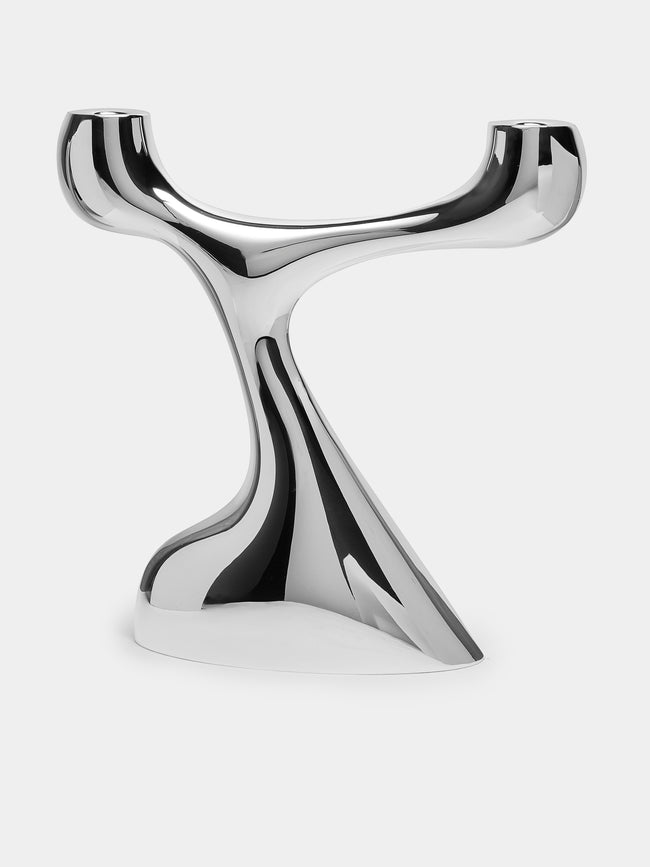
San Lorenzo 1992 Afra and Tobia Scarpa No. 68 Pure Silver Candelabra
£14,200

San Lorenzo 1971 Franco Albini and Franca Helg Pannocchia Sterling Silver Bowl
£6,400

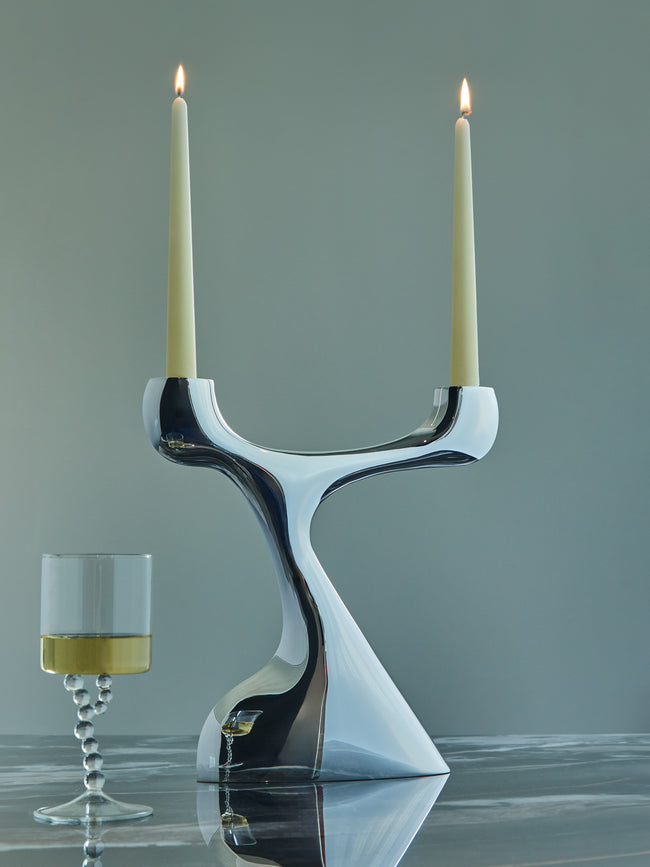
San Lorenzo 2010 Tobia Scarpa Sterling Silver Candlestick
£3,400

San Lorenzo 1988 Afra and Tobia Scarpa Engraved Sterling Silver Tea Service (Set of 3)
£9,600

San Lorenzo 1972 Afra and Tobia Scarpa Sterling Silver Rectangular Box
£4,850

San Lorenzo | Set of 5 | 1979 Afra and Tobia Scarpa Sterling Silver and Gold Serving Cutlery in Wooden Boxes
£6,800

San Lorenzo 1993 Afra and Tobia Scarpa Cartoccio Pure Silver Bowl with Tips (11in/28cm)
£1,995

San Lorenzo 1971 Afra and Tobia Scarpa Polygonal Sterling Silver Vase (4in/10cm)
£3,800

San Lorenzo 1971 Franco Albini and Franca Helg Pannocchia Sterling Silver Saucer Bowl
£1,600

Nick Vinson
Do you think it's important to rotate possessions and give them new life?
“Rotation is hard. I've not quite grasped how you do that. If you no longer require it and it has a good resale value, sure. But good things should never be gotten rid of.”
If somebody's starting furnishing their home, what advice would you give them if they don’t know where to start?
“Start with strong foundations like your sofa and dining table. Then be eclectic. Pick the things that excite you, learn the stories and meet the makers. Travel—go to Tokyo and find pieces made by woodworkers or metal workers there. Don’t be scared of putting them together in unusual ways. And do it slowly. Don't try to do it all at once because it won't work. At home, Alvaro and I spent 12 years looking for dining chairs that we both agreed on, and we finally found them together. The plant pot for a huge plant at the bottom of the stairs? 10 years looking for that. It’s good to take your time.”


Your Shopping Bag is currently empty