Morici Roma Rosewood Humidor Case (50 Cigars)
$525
7,000+ products IN STOCK and READY TO SHIP
7,000+ products IN STOCK and READY TO SHIP

What role does design play in your life, personally.
Of course, it is central to how I think, work and see the world, which informs my understanding of proportion, refinement and quality. But I think it also plays a quieter role. People often get drawn into seeing design as something decorative or fashionable, when a big part of it is actually about creating something more intuitive and quietly powerful instead of obvious. If it is working in the right way, it should enhance the more effortless parts of life as well. Dieter Rams, for example, always worked on the principle that some of the best design goes almost unnoticed, and that is something I am always mindful of.
Can you outline your process when it comes to approaching a new design commission?
It always starts with the client. Our constants are the level of consideration and detail, rather than there being a house style or us pushing our own design agenda. In a perfect world, it is about getting a proper understanding of how they live, what they respond to and how they want a place to function and feel. From there the next stage is to find the story and a rationale behind a design to build a clear framework around proportion, materiality and the sort of atmosphere we are trying to create.
What does that look like?
I try best to look at things holistically from day dot. If you look at small elements too closely, too soon, a project can end up feeling a little disjointed because you end up making quite detailed design decisions before having a full understanding of the project’s design ethos. It’s important not to think about one room or one gesture, you need to make sure that you're thinking about the full picture so that it creates a complete experience.
Where do you look for inspiration, George - are you a library fiend or do you look to social media? What sparks new ideas?
I think you have to make sure that you're being honest to yourself and searching for real design originality, not leaning too much on inspiration that’s everywhere. I often find that I’m inspired by the things you don’t necessarily see in a piece of work. I look back to classic architects such as Inigo Jones, Edwin Lutyens, and more recent ones like Carlo Scarpa who designed in such a vacuum but still designed the most amazing projects. They thought about [their work] in a super holistic way, thinking of everything from architectural details to the furniture that goes within them.
San Lorenzo 1971 Afra and Tobia Scarpa Sterling Silver Whiskey Flask
$5,880

Bodman Blades Hand-Forged Weru Burl and Damascus Steel Pizza Wheel
$1,460

San Lorenzo | Set of 2 | 1979 Afra and Tobia Scarpa Sterling Silver and Horn Salad Servers
$2,240

Giobagnara Mocambo Peg Walnut and Stone Solitaire Set
$2,180


George Wolstenholme, Design Director at Lawson Robb
Were there specific architects or movements that you have always looked up to?
I love design in general, whether it's architecture, product, cars, fashion, or objects of curiosity. I’ll go back to [Dieter] Rams again, he's always a massive [inspiration] and I try to remember his continued search for essentialism within his design and that design should always be enduring and free from noise. I also love the idea that creativity is informed by proper principles, so basically the idea that real technical knowledge can allow a creative freedom.
And what about your own personal interior style?
Generally, I like things that are architecturally restrained and refined. When I say that, I don't mean necessarily minimal but balanced. I think something can be highly detailed and balanced. If I was to do my own project, it would be a combination of Japanese and Scandinavian influence for the backbone and then modern French design for elements of play and then always English heritage for character. It’s definitely a hotchpotch, but a balanced hotchpotch. Personally, I like the quieter side of luxury and it being a bit of a journey of discovery.


What do you enjoy about that journey and the creative process?
I think it's very important that you're not a passenger throughout a process, you have to be very involved throughout every stage, and fortunately I enjoy most of that process! I love getting to know the client and building that relationship. I really enjoy finding the thread that I want hook onto that forms the project’s design framework. I don't really enjoy the bit just before pen goes to paper. I think there's always a bit of a feeling of the curse of the blank page. But I weirdly quite like the messy middle bit where you feel like you haven't quite cracked it, because you know you always get there in the end and it makes that moment that the design clicks all the more satisfying.
Do you find that middle period nerve-wracking? How do you hold your nerve when a project is yet to come together?
It is quite stressful. You have to recognize that it's not a binary process. You’re not going through a spreadsheet - some days it happens very easily and naturally on other days you either have to work a little bit harder or you just need to forget it completely and move on to something different until the right thing occurs to you. You do have to rest on the confidence that sometimes finding wrong answers get you to the right place, and that that right place is always there if you work for it.

Is there a particular craft or design objects that you are most attached to personally?
Two things. The Porsche 911s is my ultimate object, from a design perspective, people say they’re boring design because they've basically looked the ‘same’ for the last 70 years, but I think they're actually the most amazing pieces of design because they've kept such a strong DNA through its various iterations whilst staying current. Plus it’s just an awesome bit of kit. Secondly I’ve also got a leather briefcase that was my grandfather's. It's in a terrible state and I'm desperate at some stage get it restored or frame it in some way.
Do objects ever inform your designs?
For the yacht that we did recently for Haze II, we were given a very long list of the client's existing things that they've collected on their travels that they wanted to find place for in the boat, so that informed a massive part of the brief and therefore informed the design. But yes, beyond this, you have to be consciously curious with objects in general if you are to design really good ones yourself - so for sure, they have to!

Uncommon Ancestor Solstice Embroidered Velvet Round Footstool
$4,940


Mori Glass Hand-Blown Glass Striped Tumblers (Set of 4)
$320


Fuminari Araga | Set of 4 | Kohiki Ceramic Noodle Bowls (7in/18cm)
$555


George Wolstenholme, Design Director at Lawson Robb
When you're designing specialist yacht and boat interiors as opposed to a residential project, what are the non-negotiables that you must consider?
The reality is that you have to think about so much more with boats. It is not just aesthetics; technically, it is everything. The tolerances are much tighter and there is far less margin for error. That includes adhering to various codes, making sure things can be maintained properly, and ensuring there is enough storage on board etcetera. All of that needs to be considered in a way that goes far beyond how you would approach a residential project. But for me the non-negotiable is that this does not dilute the design, it can easily but it does not need to. It goes back to having the technical underpinning and the confidence that a constraint doesn’t have to be a limitation and can often be an opportunity to actually create something interesting.
What types of objects work particularly well on a boat and are there things that are an absolute no-go?
Everything needs to be functional and practical and you obviously need to be mindful that you’re on a moving vessel so things that are going to move with it or be difficult to fix down are no-gos. But then you've also got to bear in mind that that you are designing things at the height of luxury, so you cant always play things safe. The staffing element and level of deployable skills are unbelievable in the yacht industry, silverware will get polished every day, replated every year, there's a huge global network of super skilled tradesman that can carry out maintenance on bespoke high-level finishes, and the rest. So you don't have to be sensible all of the time, we just need to be mindful to give the crew a fair amount of headaches!


Function aside, what objects are fun to have on a boat?
We’re obviously catering for the owner and their guests, but we’re also catering for a charter market as well, so we must cover quite a lot of bases and different sensibilities. Whether it's cigar accessory set or a game like Chess, Mah-jong, Makambo, a good selection of water sport toys or even a padel court – there are loads of fun things to have onboard, the important thing to note is that even on the large stuff, space is at a premium, so you don’t want to be wasting any of it with things that are too much of a novelty.
What’s your best piece of advice when designing a super luxurious space like this?
When some people are designing boats and super yachts, they can a bit overexcited sometimes and throw everything but the kitchen sink at it with something elaborate going on in every corner. But that's where my quieter outlook on things comes in. People should feel comfortable spending extended periods of time onboard and ‘going big’ on every single element isn’t that conducive to that. I want there to be real wow factors, but I would much rather [details] be discovered through time on board. I generally think it's such a nice idea that you might be on board for a week or two or even a month, and then suddenly you're noticing things about the design for the first time.
George Wolstenholme, Design Director at Lawson Robb
Has that happened recently?
For a superyacht we did a few years ago, Phi, we had the bandwidth to create a few surprises. As an example, when the client was showing us around his previous boat, he said he didn’t go down to the lower deck very much. It was one of the things that I hooked onto because for such a big level investment and passion project, it's a shame for you not to feel like you're using all of the square footage. So, within the lower deck corridor, we designed a full wine cellar with a bespoke tasting station where he can choose a bottle of wine with his friends pre-dinner or have a nightcap. He had no idea that we were doing that for him and he loved it. We had such a nice time on board during handover, walking him through all of those kinds of details.
Why is it important to get into the granular detail of smalls on boats?
For me, that's all a part of the holistic process. If it's seen, then it needs to be in balance with the whole space. From the smallest details of the interior architecture but also down to the dressing, sometimes clients don't want us to get involved with the minutia of the accessories, but I generally think it's always nice when we do because we always have the clients ideals as the priority, and feel that its combination of small percentages that create the overall effect in a space.
When it comes to acquiring home-design objects in general, what do you look out for?
The one thing I would say is quality. There's so much poor-quality stuff out there today. I try and steer away from things that are white label upon white label, that you have no idea who actually made the thing. That's a big issue today that you don’t get the same level of authenticity. Finding something truly authentic where you can see the provenance is always important when collecting.
Riviere Barcelona Water-Resistant Leather Large Towel Basket
$975


Artel Golden Age of Yachting Hand-Engraved Crystal Double Old Fashioned Glass (12.5oz/365ml)
$230


Venini Gran Balloton Luce Hand-Blown Murano Glass Portable Lamp
$2,115


Pigment France Orsay Leather and Rattan Round Tray (14.5in/37cm)
$700


Rabitti 1969 Beta Leather Rectangular Low Basket
$1,675


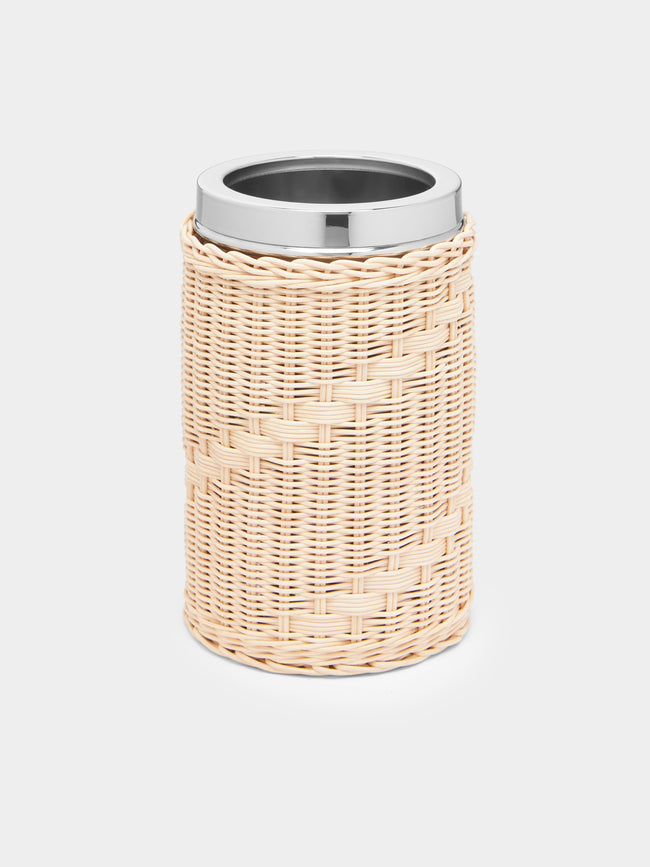
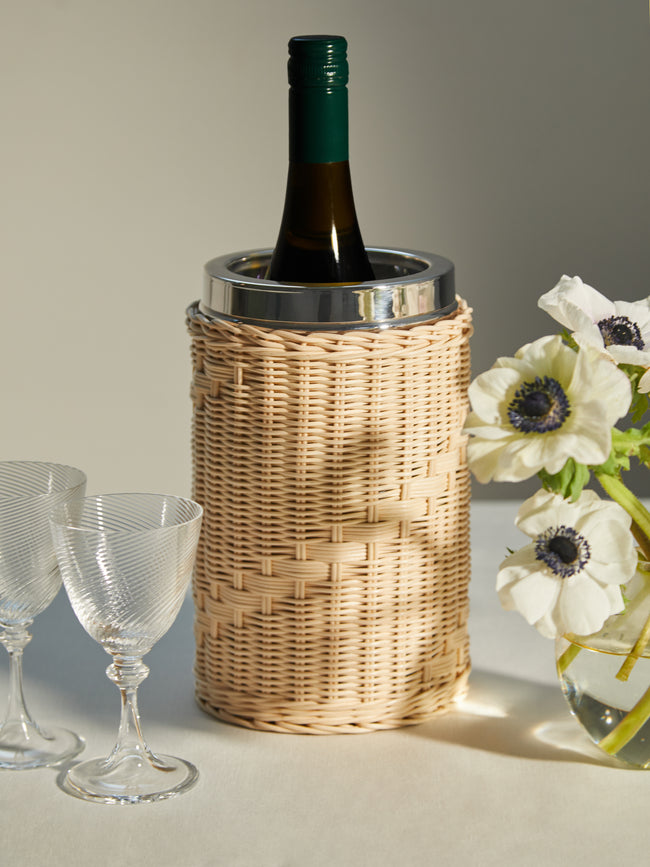
Mila Maurizi Primula Handwoven Wicker and Steel Bottle Cooler
$445


Hering Berlin | Set of 6 | Ocean Porcelain Assorted Dessert Plates (7in/18cm)
$715

Your Shopping Bag is currently empty